Log and Timber Framed Home Inspections in the Okanagan and Shuswap
- Education-first approach tailored to log and timber construction
- Understanding how log condition and moisture affect long-term durability
- Full residential inspection combined with log-specific inspection focus
- Clear explanations, photo-heavy reports, and practical context for buyers and owners
- Serving log and timber homes throughout the Okanagan, Shuswap, and Thompson-Nicola regions
Certified Log Home Inspections That Go Beyond a Standard Residential Checklist
Jump to Common Inspection Questions or Book Your Inspection
Log Home Inspection Expertise Includes
- Experience with log condition patterns and how solid wood ages over time
- Understanding of moisture exposure risks unique to log and timber construction
- Familiarity with joinery and connection details common in log homes
- Awareness of settling and movement behavior built into log home design
- Knowledge of finishes and sealants and how they influence moisture performance
- Consideration of ventilation and drainage as they relate to log structures
- Inspection perspective informed by Interior BC climate and seasonal moisture cycles
These types of conditions often appear normal to buyers unfamiliar with log construction.
Are you Buying, or Considering a Log or Timber Framed Home?
Log and timber homes raise questions that don’t come up during standard inspections. A short conversation with us helps ensure your log home inspection reflects the home’s construction, its history, and the real conditions it has experienced.
Why Log Homes Are Not Inspected Like Conventional Homes
Logs Act as Both Structure and Exterior Wall
Moisture Movement in Solid Wood Requires a Different Evaluation
Settling and Shrinkage Are Normal — but Only Within Design Limits
Corners, Joinery, and Log Interfaces Are Critical Inspection Areas
Chinking, Sealants, and Finishes Function as a System
Exposure, Sun, and Site Conditions Affect Log Performance Over Time
All these considerations are evaluated as part of a professional log home inspection, alongside a full residential inspection, informed by experience inspecting log and timber homes across the Interior of BC.
Not Sure What’s Different About a Log Home Inspection?
As a log home inspector experienced working in the Okanagan and Shuswap, I help clients understand what’s included in a standard home inspection and what additional inspection considerations are required for log and timber construction. This helps clarify expectations and ensures the inspection reflects how these homes are designed to perform.
What’s Included in a Professional Log Home Inspection

Full Residential Inspection
- Roofing systems, flashing, roof drainage
- Structure, framing, envelope, and foundation elements
- Attic spaces, insulation, and ventilation
- Plumbing and drainage systems
- Electrical systems and safety components
- Heating and cooling equipment (HVAC)
- Interior finishes, doors, windows, and safety features
- Site drainage, grading, and exterior conditions
This establishes a clear baseline so log-specific evaluation areas can be understood in proper context.
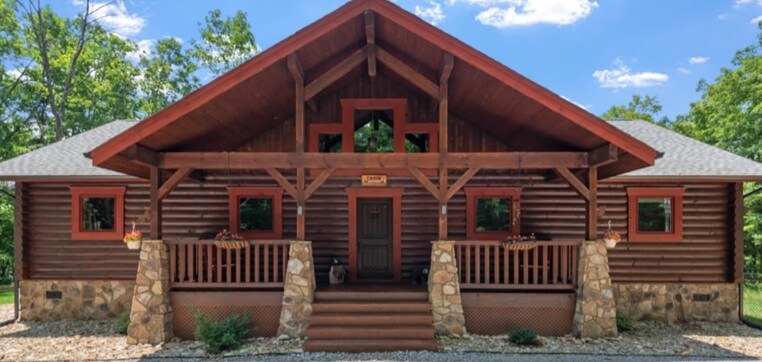
Log Home Specific Evaluations
- Log surface condition and visible deterioration patterns
- Moisture exposure at log ends, corners, and horizontal interfaces
- Log-to-log connections, joinery details, and visible fastening methods
- Checking patterns, with context around normal versus potentially concerning behavior
- Settling allowances, compression points, and movement-related detailing
- Chinking, sealants, and finishes and their compatibility and condition
- Flashing transitions and penetrations through log walls
- Site exposure and drainage factors affecting long-term log performance
These observations are reviewed in that context, alongside the full residential inspection, to help clients understand how the log structure is performing as a whole.
Together, these inspection components provide a complete picture of the home — combining a full residential inspection with log-specific evaluation so buyers understand not only the condition of standard systems, but also how the log structure itself is performing. This integrated approach offers clarity, context, and confidence when making decisions about a log or timber home.
Want to Know What’s Included for Your Specific Log Home?
Every log and timber home is a bit different—age, site exposure, and past maintenance all shape what’s worth a closer look. I’ll walk you through what the inspection covers and what log-specific evaluation areas matter most for the home you’re considering.
Common Log Home Concerns And What They Mean
Below are some of the most common conditions I see during inspections across the Okanagan and Shuswap.

Cracking / Checking in Log Structure

Darkened / Weathered Log Surface

Visible Settling Gaps / Movement

Chinking / Sealant Separations
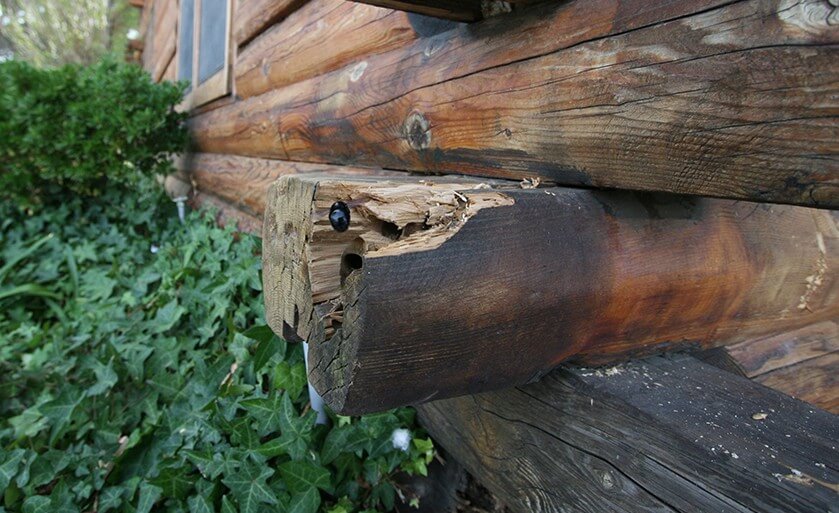
Moisture Exposure at Log Ends / Corners

Past Repairs / Home Modifications
Seeing One of These Conditions on a Log Home You’re Considering?
Many features that concern buyers at first glance are common in log and timber homes. My role as the inspector is to explain what’s normal, what’s maintenance-related, and what deserves closer attention—so you’re making decisions based on context, not assumptions.
How Regional Conditions Influence Log Home Performance

Okanagan Log Home Conditions
- High UV exposure affecting finishes and surface checking
- Extended dry seasons influencing log shrinkage and joint behavior
- Day-long sun exposure on open sites with limited tree cover
- Lake-adjacent humidity impacting drying patterns at lower elevations
- Rural property layouts where access and maintenance patterns vary

Shuswap Log Home Conditions
- Longer winter seasons with extended snow retention
- Freeze–thaw cycles affecting exposed log surfaces
- Spring melt conditions and site drainage behavior
- Seasonal or recreational occupancy patterns
- Dense forest exposure influencing sun access and drying

Log Homes at Elevation and Ski Communities
- Higher snow loads and longer snow seasons
- Ice and meltwater management at roof edges and transitions
- Shorter drying windows due to cooler temps and shade
- Decks and attachments exposed to snow accumulation and wetting
- Access and maintenance challenges for remote or seasonal properties
How Does Location Influence a Log Home’s Performance?
Log homes don’t perform in isolation — climate, elevation, sun exposure, and site characteristics all shape how they age over time. Local inspection experience helps interpret what you’re seeing and explain whether a feature reflects expected performance, routine maintenance, or something that deserves closer attention in this region.
Specialized Training For Log and Timber Framed Home Inspections

Log and Timber Home Inspection Education and Credentials
- Certified Log Home Inspector — formal training focused on log and timber construction systems
- InterNACHI Certified Professional Inspector (NACHI23072715)
- Consumer Protection BC Licensed Home Inspector (License #86237)
- WETT Canada Certified — solid-fuel and wood-burning systems (WETT #14043)
- Advanced moisture and building-envelope education relevant to solid wood structures
- Ongoing continuing education specific to log, timber, and hybrid construction
- Inspection experience across varied Interior BC climates, elevations, and site conditions
This foundation allows inspection observations to be made with consistency, context, and technical clarity.
What It’s Like to Work With Me as Your Inspector
- Unhurried, methodical inspections that prioritize accuracy over speed
- Clear explanations during the walkthrough, not just in the report
- Education-first communication focused on helping clients understand context
- Photo-heavy reports that visually document findings and locations
- Balanced observations that distinguish normal characteristics from true concerns
- Practical guidance on maintenance versus items that warrant further review
- Availability for follow-up questions after the inspection is complete
This approach helps clients feel informed, supported, and confident in the decisions they’re making.
Together, formal training and a thoughtful inspection process work hand in hand to create a clear, reliable inspection experience. Technical knowledge ensures observations are accurate and grounded, while a calm, education-focused approach ensures those findings are explained in a way clients can actually use. The result is an inspection that feels thorough, transparent, and supportive—helping clients move forward with confidence rather than uncertainty.
Why Education and Inspection Process Matter in a Log Home Inspection
A good inspection doesn’t tell you what decision to make. It combines specialized education with a clear, methodical inspection process to explain how the home is performing, what’s typical for this type of construction, and what information actually matters—so you can decide what feels right for you and your situation.
See Our Verified Reviews from Okanagan, Shuswap, and Thompson-Nicola Clients
190+ 5⭐ Google Reviews - Clients Often Mention
- ⭐ Thorough inspections + Strong Attention to Detail
- ⭐Clear Explanations / Walkthrough Education
- ⭐Organized Scheduling / Quality Communication
- ⭐ Useful, Photo Rich Reports with Fast Turnaround
Frequently Asked Questions - Log and Timber Home Inspections in Okanagan and Shuswap
Are cracks or checking in logs normal, or are they a structural concern?
Cracks and checking are a normal characteristic of solid log construction. As logs dry and adjust over time, surface cracks often develop along the grain as part of natural wood movement.
During an inspection, checking is evaluated in context—looking at depth, orientation, location, and exposure. Most checking does not affect structural performance, but certain patterns or locations may influence moisture behavior and are noted accordingly.
Does dark or weathered log surface mean the wood is rotting?
Not necessarily. Darkened or weathered log surfaces are often the result of long-term sun exposure, finish aging, or surface moisture exposure rather than active decay.
Inspections focus on surface texture, firmness, and drying behavior to help distinguish normal weathering from conditions that may warrant maintenance or closer review.
Should log homes move or settle over time?
Yes. Log homes are designed to accommodate settling and movement as solid wood naturally compresses and adjusts with changes in moisture content.
Visible gaps or movement are evaluated based on location and detailing to determine whether they align with the home’s design or suggest unintended effects that could impact finishes or moisture management.
Is separation in chinking or sealant a defect?
Chinking and sealants are flexible materials intended to move with the logs. Separation can occur over time and is often part of normal aging and maintenance cycles.
An inspection looks at consistency, exposure, and performance to help determine whether separation reflects routine maintenance needs or areas where performance may be affected.
Why do inspectors pay close attention to log ends and corners?
Log ends and corners are more exposed to weather and absorb moisture differently than mid-span log surfaces. These areas often dry more slowly and can experience greater wear.
Inspections focus on exposure, drainage, and drying potential rather than assuming moisture presence alone indicates a problem.
Are past repairs or modifications in a log home a red flag?
Not automatically. Many log homes undergo repairs or modifications over time as part of normal ownership, maintenance, or updating.
Inspections document repairs to understand compatibility, workmanship, and how modifications interact with original log systems.
Do all cracks, gaps, or stains need to be fixed immediately?
No. Many visible characteristics in log homes are expected and manageable rather than urgent concerns.
The inspection process helps distinguish normal aging and routine maintenance items from conditions that may benefit from further evaluation.
How does climate affect log home performance?
Climate plays a significant role in how log homes age and perform. Sun exposure, moisture levels, temperature swings, and elevation all influence drying cycles and material movement.
Inspection observations are interpreted with regional conditions in mind to provide accurate context.
Is insect activity common in log homes?
Evidence of insects can be present in log homes, particularly in exterior wood. Inspections look for signs that suggest normal exposure versus activity that may require further attention.
How is moisture evaluated without invasive testing?
Inspections rely on visual indicators, material behavior, detailing, and exposure patterns rather than destructive testing.
Are log homes harder to maintain than conventional homes?
Log homes require a different maintenance approach, but not necessarily more maintenance—just an understanding of how solid wood systems perform.
Does a log home inspection include the same systems as a standard inspection?
Yes. A full residential inspection is completed, with additional log-specific evaluation layered on top.
How are decks and attachments evaluated on log homes?
Decks and attachments are reviewed for detailing, drainage, and how they interact with log walls and movement allowances.
Can finishes affect how logs dry and perform?
Yes. Finishes play an important role in moisture management, and inspections consider condition, compatibility, and coverage.
Are WETT inspections important for log homes with wood-burning systems?
Yes. Many log homes rely on wood-burning appliances, making WETT-certified inspections important for safety and insurance considerations.
Is a log home inspection right if I’m just gathering information?
Absolutely. Many clients use inspections to better understand log construction and ownership considerations before making decisions.
What if I love the home but feel overwhelmed by the findings?
Inspections are designed to provide clarity, not pressure. Findings are explained in context so you can decide what feels right for your situation.
Will the inspection tell me whether I should buy the home?
No. A good inspection provides information and context—it doesn’t make the decision for you.
How do I book a log and timber home inspection in the Okanagan or Shuswap?
Inspections can be booked by phone or online with At Ease Property Inspections. Availability and inspection scope are all confirmed before scheduling.
Okanagan and Shuswap Log and Timber Frame Homes Service Locations | At Ease Property Inspections
As a CPBC-licensed home inspector with specialized training in log and timber construction, At Ease Property Inspections serves log and timber-framed homes throughout the Central Okanagan, North Okanagan, the Shuswap, and surrounding mountain and ski-hill communities. Service areas include Kelowna, West Kelowna, Lake Country, Vernon, Coldstream, Armstrong, Salmon Arm, Sicamous, Blind Bay, and nearby rural and lakeside properties. Experience inspecting log homes across sun-exposed valleys, lake-influenced climates, and higher-elevation environments—such as Big White, Silver Star, and Sun Peaks—allows each inspection to reflect how solid wood construction actually performs under local conditions. This regional understanding helps ensure observations are accurate, balanced, and meaningful for buyers considering log and timber homes in Interior British Columbia.